

How to Remove Dried Wax from Paint Brushes
Quick Summary
The most reliable way to remove dried wax from paint brushes is a short Odourless Solvent dip, followed by a bristle massage and a wash with Brush Soap. The exact phrase how to remove dried wax from paint brushes applies to this three-stage sequence, which breaks the wax grip, softens what remains, and washes out residue. Start with the gentlest method that fits your wax and brush.
- Dip only the lower inch of bristles in Odourless Solvent for 15 minutes, never submerging the ferrule.
- Using gloves, work the solvent into the bristles more to loosen up wax and then rinse under warm water.
- Wash twice with Brush Soap and warm water to remove both oil and the soap film.
- A clean brush has separated bristles, no gray residue on a white towel, and a slightly squeaky feel when damp.
- Dry brushes flat or hung bristles-down, never standing bristles-up in liquid, and wait 24 hours before use.
Table of Contents
- Why Dried Wax Ruins Paint Brushes and When It Can Still Be Saved
- Choosing a Method by Wax Type and Brush Material
- How to Clean Hardened Wax Brushes with Solvent and Soap
- Best Solvent for Cleaning Wax Brushes and Safe Alternatives
- How to Remove Wax Resist from Brushes and Recover Damaged Bristles
- How to Care for Furniture Wax Brushes So They Last
- Keep Your Brushes Soft and Ready for Your Next Project
- Frequently Asked Questions
Why Dried Wax Ruins Paint Brushes and When It Can Still Be Saved
Last Updated: November 16, 2026
Wax hardens in the bristles and locks them in place. Once that happens, the brush stops holding paint evenly and leaves streaks or lumps.
Start by looking at the brush. If the wax is still soft, a quick cleaning will usually bring it back.
- Soft wax: Usually cleans up with a simple wipe and a rinse.
- Hardened wax: Needs a solvent or oil to loosen it.
- Wax stuck deep in the base: May need several rounds of cleaning, and the bristles may stay a little stiff.
Do not wait too long. The longer dried wax sits, the harder it is to remove and the more likely the bristles are to break or splay.
Choosing a Method by Wax Type and Brush Material
Most failed cleanings happen before any cleaner touches the brush: the wrong method is chosen for the wax or the bristle. The two variables that matter are how hard the wax has set and what the bristles are made of. Get those right and the rest is patience.
How wax type changes the method
- Soft paste wax or furniture wax (still tacky): The wax has not fully crystallized. Warm water and Brush Soap, worked in with your fingers, will lift most of it. Solvent is overkill here and only adds fumes.
- Chalk-paint wax and finishing wax (firm but dentable with a fingernail): These blends carry oils and dryers. Start with a solvent massage, then finish with brush soap.
- Fully dried wax (hard, crusty, glossy, no fingernail dent): The wax has set solid around the bristle base. A solvent soak followed by a brush soap wash is the reliable sequence. See the dried-wax method below.
How brush material changes the method
- Natural bristle (hog, boar, badger): The hair shaft has a scaly surface that absorbs oil and swells slightly in water. Natural bristles tolerate oil well and tolerate brief solvent contact, but prolonged solvent soaking strips the natural lanolin and leaves them brittle. Keep solvent contact short and always finish with a soap wash.
- Synthetic bristle (nylon, polyester, Taklon): Filaments are smooth and non-absorbent, so wax sits on the surface rather than inside the hair. That makes synthetic brushes easier to clean but also means solvent can attack the filament tips and the glue at the ferrule if the brush is left standing in it. Never soak above the bristle base.
- Mixed bristle: Treat as natural. The natural hairs will set the limits.
A compatibility guide you can apply in ten seconds
Wax state |
Natural bristle |
Synthetic bristle |
|---|---|---|
Soft or tacky |
Warm soap and water |
Warm soap and water |
Firm, dentable |
Solvent dip, then brush soap |
Solvent dip, then soap |
Fully dried |
Brief solvent dip, then brush soap |
Brief solvent dip, then brush soap |
Ceramic wax resist |
Warm soapy soak and work with brush soap |
Warm soapy soak and work with brush soap |
Two rules override the table. First, if the brush has a wooden handle or a painted ferrule, keep every liquid below the ferrule line; solvent and water both creep under the ferrule and loosen the glue. Second, if you are unsure how a bristle will react, test on the outer edge of the bristle pack and wait ten minutes before committing the whole brush.
Watch out: a brush that feels stiff after a soap wash is not necessarily still waxed. Natural bristles stiffen as they dry, and synthetic bristles can hold a soap film. Judge by feel when damp, not when dry, before deciding to escalate to solvent.
How to Clean Hardened Wax Brushes with Solvent and Soap
This is the sequence for wax that has dried solid, not for routine cleanup. The order matters: solvent breaks the wax's grip, soap removes the wax residue and conditions the bristles with linseed oil. Skipping a stage is why brushes come out stiff.
Work in a well-ventilated space, wear nitrile gloves, and keep solvent away from open flames and pilot lights.
Stage 1: Break the surface with a brief solvent dip
- Pour about an inch of Odourless Solvent or mineral spirits into a glass jar. Glass matters: solvent can cloud or soften some plastics.
- Dip only the lower inch of bristles. Do not submerge the ferrule.
- Hold for 30 to 60 seconds, then lift and press the bristles gently against the side of the jar to work solvent into the base.
- Wipe on a lint-free cloth. The first wipe will come away waxy and discolored; that is expected.
- Repeat the dip-and-wipe two or three times, never letting the brush sit in the jar between rounds.
Watch out: leaving the brush standing in solvent is the most common way to loosen a ferrule and splay a brush. Solvent wicks up the bristles by capillary action and attacks the glue.
Stage 2: Soften the remainder with Brush Soap
- Mix a small amount of Brush Soap into the bristles.
- Work the soap into the bristles with your fingers, starting at the base and moving outward. This is where most dried wax actually releases.
- Wipe on a clean cloth. Repeat until the cloth shows only oil, not wax grit.
Stage 3: Wash out wax and solvent with brush soap
- Apply about a tsp of brush soap directly to the bristles and work it in with warm water.
- Rinse under warm running water, working the bristles between your fingers.
- Repeat the soap wash twice. The first wash removes oil, the second removes the soap film.
How to tell when the brush is actually clean
Stop guessing. A brush is clean when all three of these are true:
- The bristles separate individually when you fan them with your fingers, with no clumped core at the base.
- A wipe on a white paper towel leaves no gray or yellow residue.
- The bristles feel slightly rough and squeaky when damp, not slick. Slick means soap or oil remains.
If the bristles are still stiff
A brush that stays stiff after three full cycles usually has wax packed at the ferrule, not on the bristle tips. Try a longer solvent stage, working the solvent in with a comb rather than fingers, and give it an hour before washing. If it is still stiff after that, the wax has likely polymerized into the glue line and the brush is a candidate for rough work rather than fine finishing.
Drying and storing after a solvent clean
Shape the bristles with your fingers, then dry the brush flat or hung bristles-down. Never stand a wet brush bristles-up in a jar; water and solvent drain into the ferrule and soften the glue. Let it dry for at least 24 hours before the next use, and store it in its original sleeve or wrapped in paper to hold the shape.
Best Solvent for Cleaning Wax Brushes and Safe Alternatives
For most dried wax, Odourless Solvent, mineral spirits or paint thinner is the most effective solvent. It cuts through hard wax faster than soap alone. However, it is not the only option.
If you cannot use mineral spirits, try these alternatives:
- Canola or olive oil: Slow but safe for all brush types.
- Brush Soap: Works on soft wax and as a final wash.
- Methylated spirits: Can help on some waxes, but test first on a hidden bristle area.
Pick the gentlest method that gets the job done. For a synthetic bristle option to pair with your chosen solvent, see the Staalmeester Premium Paint Brush Angled Synthetic Bristle.
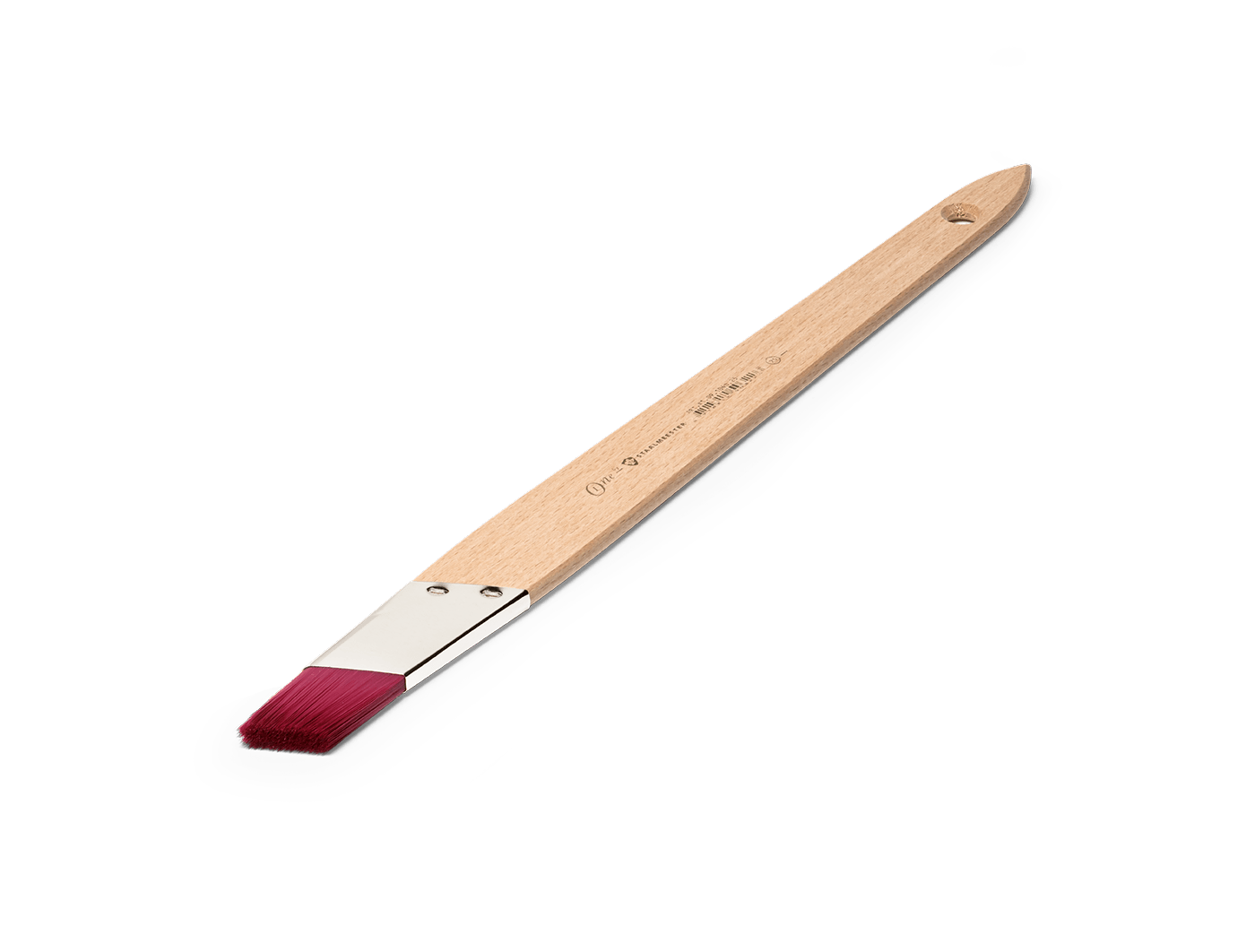
StaalMeester Premium Angled Synthetic Bristle Paint Brush
How to Remove Wax Resist from Brushes and Recover Damaged Bristles
Wax resist and ceramic wax resist are often used in decorative painting. They can leave stubborn residue that makes brushes stiff.
To learn how to remove dried wax from paint brushes, start by soaking the bristles in warm soapy water for about 10 minutes. Then work the bristles gently between your fingers. If the bristles stay stiff, apply a small amount of solvent and repeat the soap wash.
To recover damaged bristles:
- Reshape them with your fingers while they are still damp.
- Let the brush dry flat or hung with the bristles pointing down.
- Avoid leaving the brush standing in liquid, which can bend the bristles.
Some damage cannot be undone. If the bristles stay splayed or hard after several cleanings, the brush may be best used for rough work.
How to Care for Furniture Wax Brushes So They Last
Good habits keep brushes working for years. Clean your brushes soon after each use, even if you plan to use them again the same day.
- Wipe off excess wax immediately after finishing a project.
- Wash with brush soap and warm water at the end of each session.
- Store brushes flat or hung so the bristles keep their shape.
- Use separate brushes for wax and paint whenever possible.
A little care now saves money later. Quality brushes last much longer when they are cleaned regularly.
Keep Your Brushes Soft and Ready for Your Next Project
Dried wax does not have to mean the end of a good brush. With the right method, most brushes can be cleaned and returned to working condition.
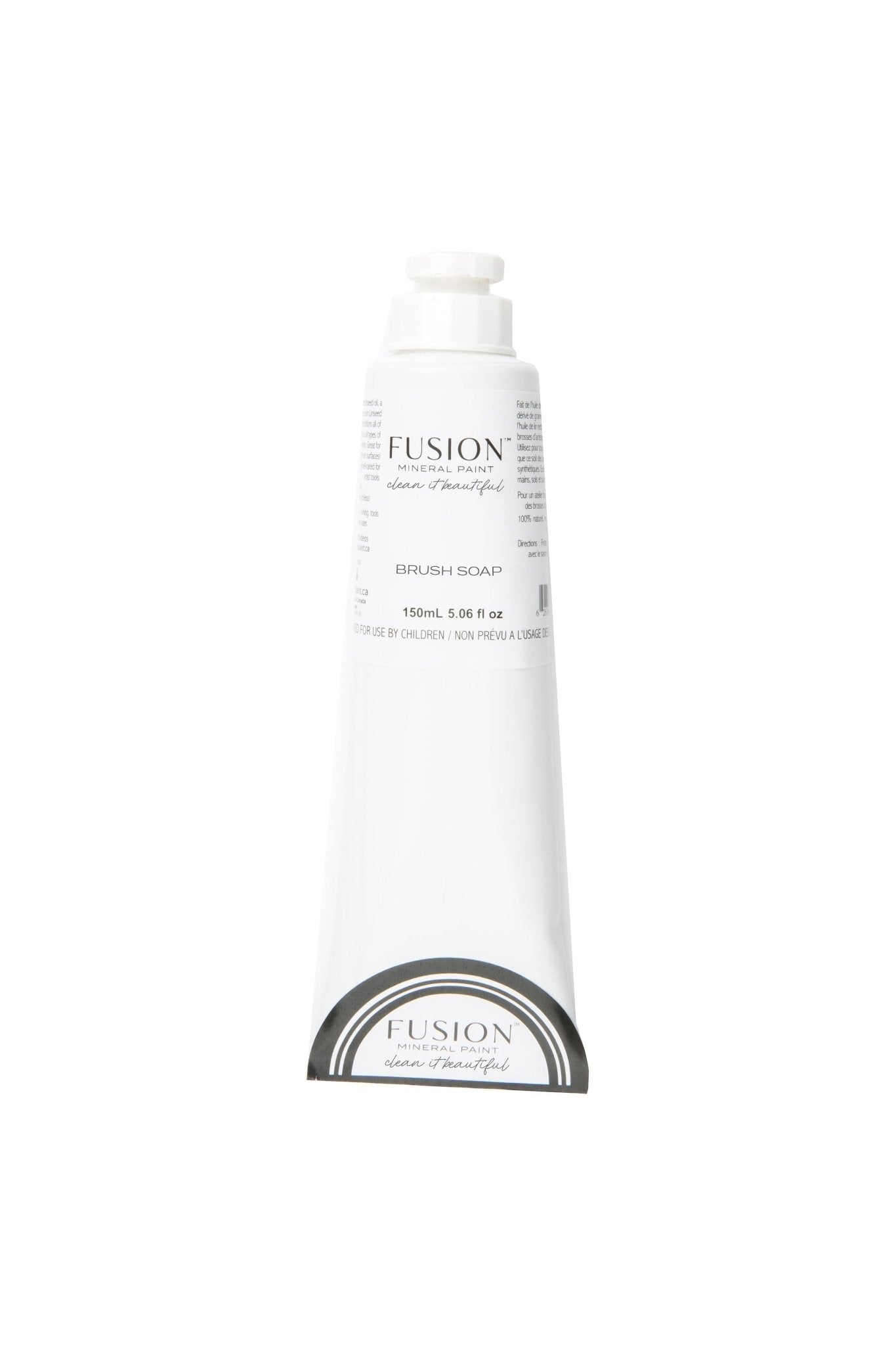
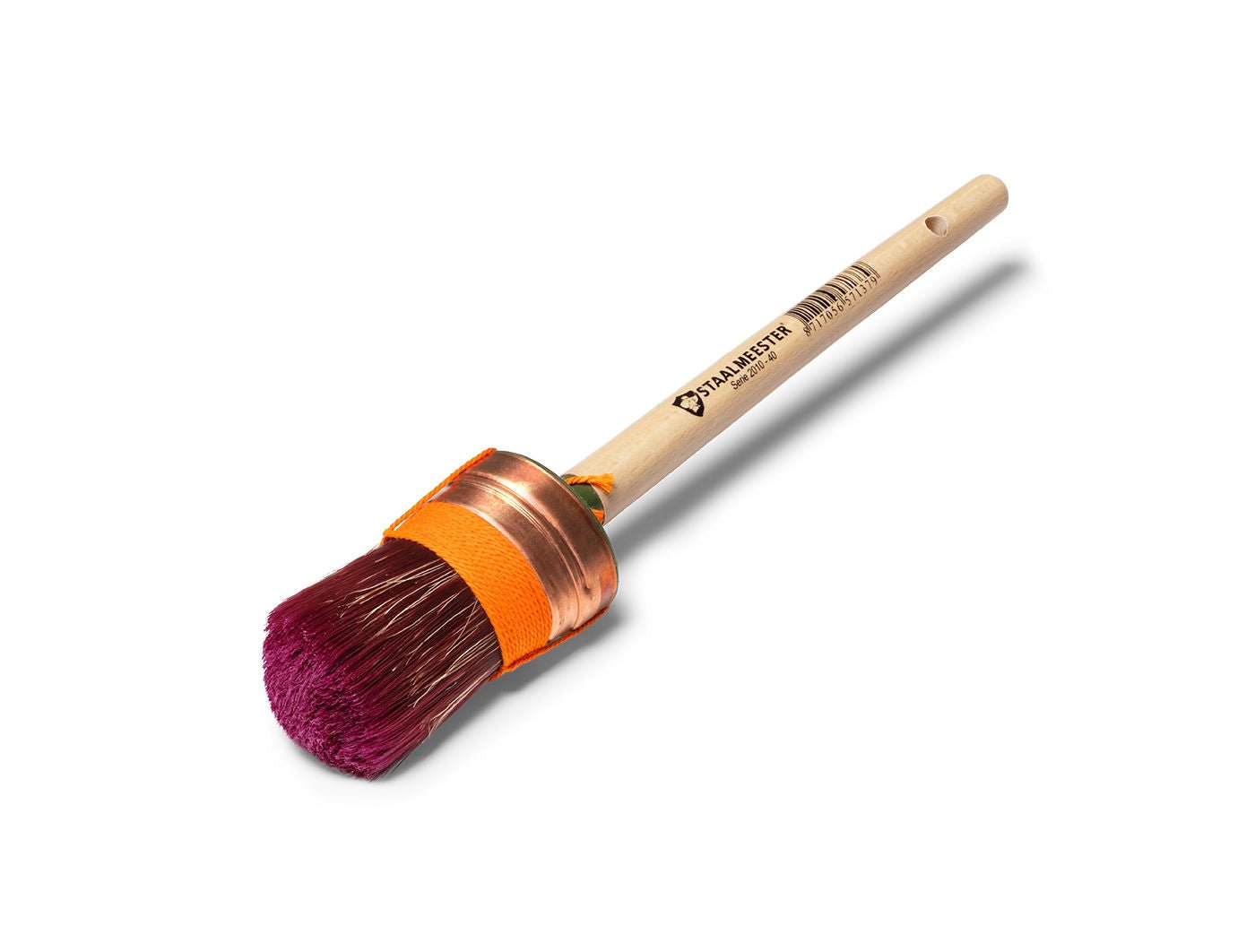
For brushes that need a final soft finish, Regained Relics carries Fusion Mineral Paint Brush Soap at $12.99. For your next project, our StaalMeester Premium Paint Brush Oval Synthetic Bristle at $32.99 is a reliable choice for smooth finishes on furniture.
Frequently Asked Questions
How do you remove dried wax from a paint brush?
Start by softening the wax. Dip the bristles in mineral spirits or a small amount of solvent for several minutes, then gently work it into the bristles with your fingers or a lint-free cloth. Once the wax loosens, wash the brush with brush soap and warm water, rinse thoroughly, and reshape the bristles while they dry flat or hanging. Repeat if wax remains near the ferrule, since residue there is the most common reason a brush stays stiff.
What is the best solvent for cleaning wax brushes?
For most dried furniture wax, Fusion's Odourless Solvent, mineral spirits or paint thinner is the strongest option, but it should be used in a ventilated area with gloves and eye protection. Oil such as canola or olive oil is a gentler alternative that loosens wax well and suits readers who cannot work with solvents. Either way, finish with brush soap and water to remove leftover film. Dispose of used solvent according to local hazardous waste rules rather than pouring it down a drain.
Can you use mineral spirits to clean a wax brush?
Yes, Odourless Solvents and mineral spirits are one of the most effective ways to dissolve hardened wax from a brush. Work the bristles in a small amount of solvent, press out the softened wax, and repeat until the solvent runs clear. Because natural bristles can dry out, wash the brush afterwards with brush soap and water. The linseed oil in the brush soap conditions the bristles. Keep the solvent away from heat and open flames, and store used rags in a sealed metal container.
Can a brush with dried wax be saved?
In most cases, yes. Brushes with wax in the bristles can usually be recovered if the bristles are not splayed or broken. Soak the head in oil to loosen the wax, clean with soap, and then smooth the bristles with your fingers as they dry. Brushes that are badly hardened near the base may need a second round of cleaning. If the bristles stay stiff after repeated cleaning, the brush is probably past recovery and is best replaced.
